CON TE PARTIRÒ
How far is an adult son willing to go in a solo public walk to the suicide point of the Golden Gate Bridge in order to meet his father's spirit? Might they finally be able to see one another there as they truly are?
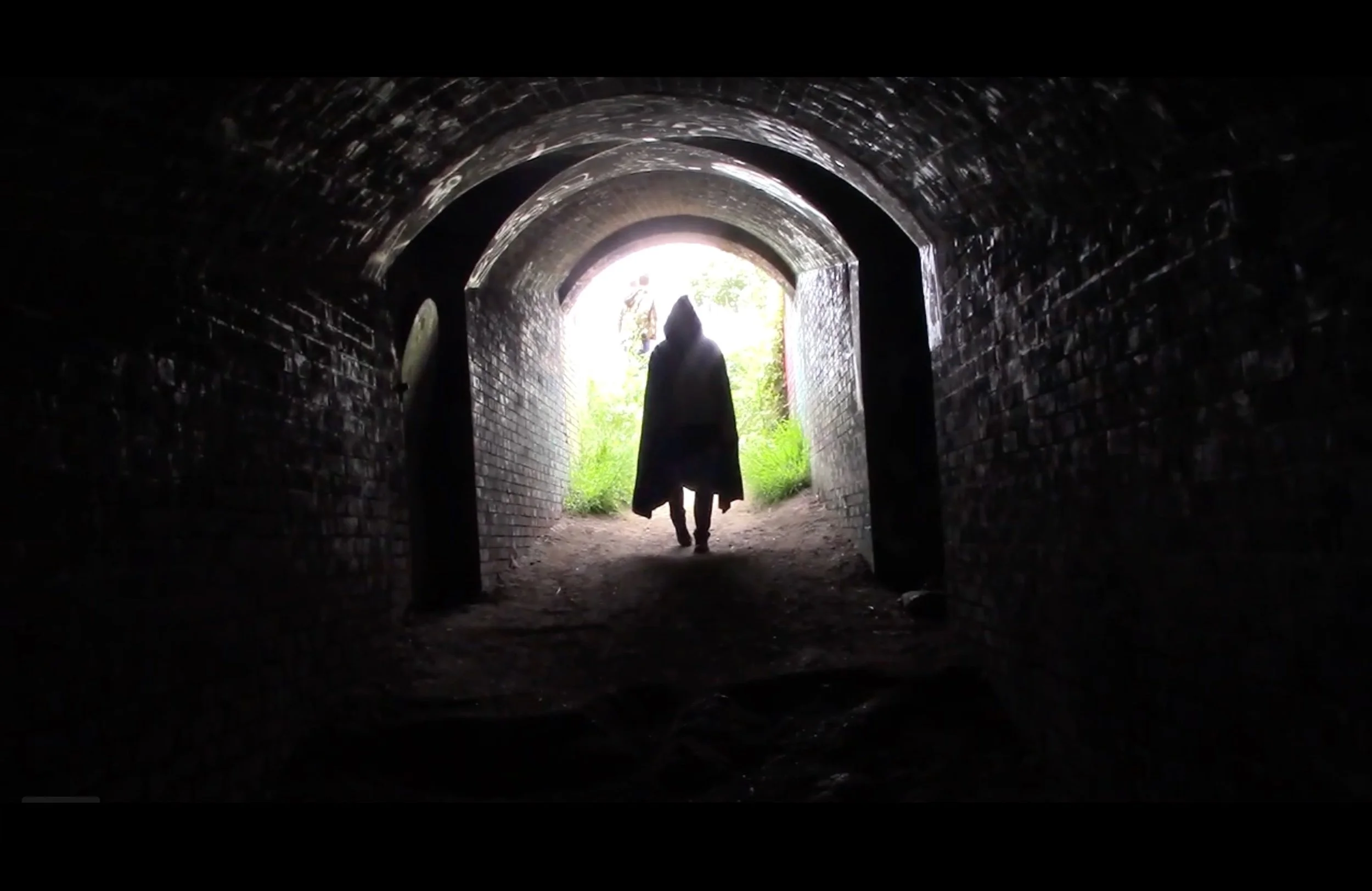
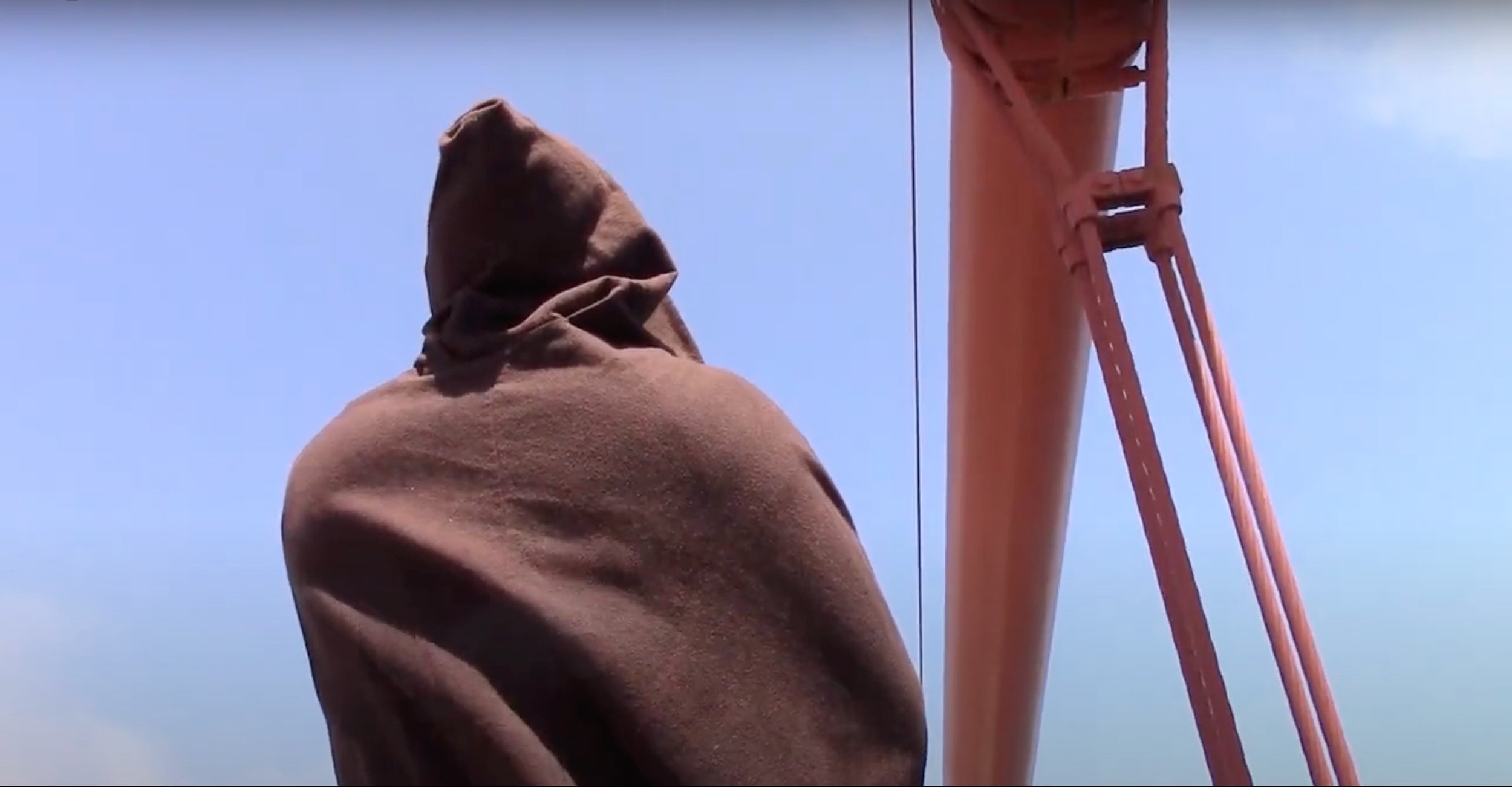
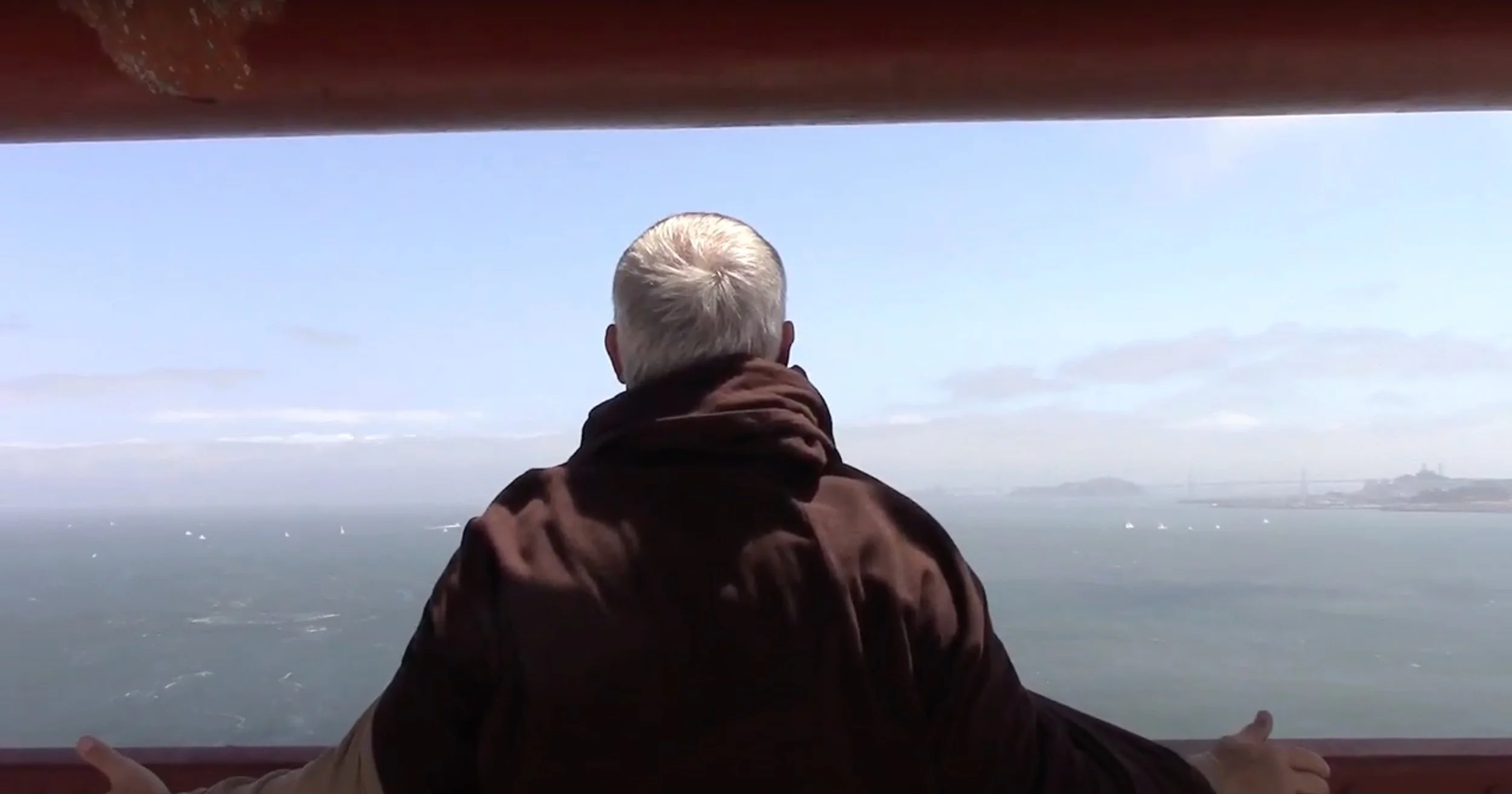
In this solo performance walk, my character wears the brown cloak of Donn, Celtic God of Death, and walks from a WW 2 battery tunnel onto the Golden Gate Bridge and halfway across to its high point—a typical spot for suicide. There I kneel, stand, then open my arms, my heart, and my inner sight to that great space high above the water—so pregnant with both life and death--featuring the skyline of San Francisco. Swinging an “acoustic censer,” emitting not smoke, but a continuous loop of Andrea Bocelli’s song, Con Te Partirò, I dance and swirl, walk, slow, and pause. I seek to explore this character’s odd fantasia, desiring to process through the crowded traffic of this famous bridge because it might be the only place his father might ever love him—a death-holding space. Is this where this middle-aged son and his diseased father might be able to actually see each other for the first time--something they were never able to do in life? The song Con Te Partirò literally means I’ll depart with you. But clearly, the song is about the big departure—from life to death, cojoined. Inspired in part by Kushner’s Angels in America, I imagined this character would see various animals, angels, devils, and symphonic orchestra members playing the music, in the web of cables at the bridge’s high point—encouraging him forward. Will he leap? Does he think literal death is the only place to find his father? Bocelli’s operatic tenor culminates in a long-held high note that might signify the long drop off the bridge and down into the water… or… not. Ultimately the piece asks, what profound internal lengths are we willing to go to be seen, to see each other--at least for an estranged father and son pair?